Many cats in Arlington, Somerville, Cambridge, and Medford live in apartments, condos, and two-family homes. Indoor living keeps cats safe from traffic, predators, and many infectious diseases, and indoor cats often live longer as a result. But a smaller space also means fewer natural outlets for climbing, hunting, and exploring.
Without enough stimulation, indoor cats can become bored, stressed, or overweight. The good news is that you do not need a big house to give your cat a rich, healthy life. With a few smart changes and regular wellness care, even a studio apartment can be a great home for a cat.
Why Enrichment Matters for Indoor Cats
Cats are natural hunters. In the wild, they spend much of their day stalking, pouncing, and exploring. When those instincts have no outlet, we often see problems such as:
- Weight gain and obesity
- Overgrooming or hair loss
- Scratching furniture or nighttime zoomies
- Urinating outside the litter box
- Stress-related bladder inflammation, a common cause of feline lower urinary tract disease
Enrichment is not a luxury. For indoor cats, it is a real part of preventive health care.
Think Vertical When Space Is Limited
Cats experience their territory in three dimensions. When floor space is tight, adding height is the easiest way to make your home feel bigger to your cat.
- Add a tall cat tree near a window
- Install wall-mounted shelves or perches
- Clear the top of a bookcase or dresser as a lookout spot
- Offer a window perch so your cat can watch birds and street activity
In multi-cat homes, vertical space also reduces tension by giving each cat room to claim their own spot.
Play Like a Hunter
Short, focused play sessions are one of the best ways to keep indoor cats fit and content. Aim for two or three sessions of 10 to 15 minutes each day.
- Use wand toys that mimic birds or mice
- Move the toy away from your cat, not toward them, the way real prey would
- Let your cat “catch” the toy at the end of each session
- Follow play with a small meal to complete the hunt, eat, rest cycle
- Rotate toys weekly so they stay interesting
Laser pointers can be fun, but always end with a physical toy your cat can grab so they do not become frustrated.
Make Mealtime an Activity
Many indoor cats eat their entire day’s food in minutes. Food puzzles and feeding games slow eating, burn energy, and satisfy the urge to forage.
- Try puzzle feeders or treat balls
- Hide small portions of kibble around the home
- Split daily food into several small meals
- Measure food carefully rather than free-feeding
Set Up the Litter Box for Success
In smaller homes, litter boxes often end up tucked in a closet or next to a noisy washing machine. Cats are particular about where they go, and a poorly placed box is one of the most common causes of accidents.
- Provide one box per cat, plus one extra when possible
- Choose quiet, easy-to-reach locations
- Use a large, uncovered box with unscented litter
- Scoop at least once daily
A sudden change in litter box habits can be a medical issue rather than a behavior problem, so please call us if you notice straining, frequent trips, or blood in the urine. A male cat straining with little or no urine is an emergency.
Safe Ways to Enjoy the Outdoors
Some indoor cats enjoy supervised outdoor time. If you have a porch or small yard, consider:
- A screened “catio” or window box enclosure
- Harness training for short, supervised outings
- Secure window screens, especially in upper-floor apartments
If your cat spends any time outdoors, talk with us about flea, tick, and vaccine protection.
Indoor Cats Still Need Regular Checkups
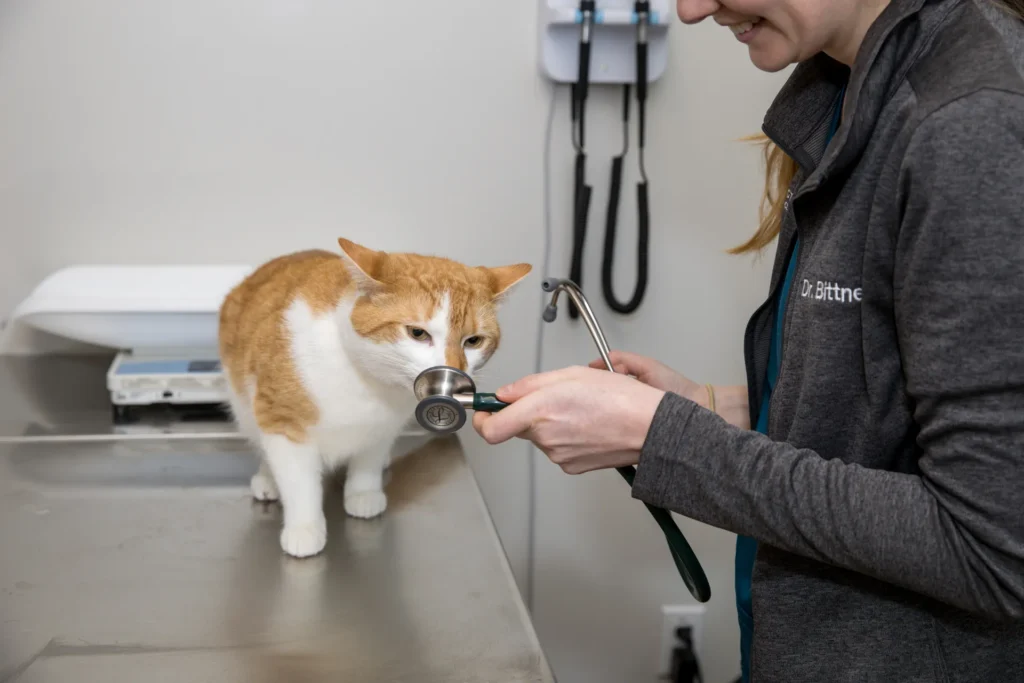
Cats are experts at hiding illness, and indoor cats are not immune to health problems. Yearly exams help us catch issues early, including dental disease, weight changes, arthritis, hyperthyroidism, and kidney disease. Indoor cats also still need a rabies vaccine under Massachusetts law.
If getting your cat into a carrier is a struggle, you are not alone. Leaving the carrier out at home with a soft blanket and treats inside can make vet visits much easier.
Common Questions About Indoor Cat Care
How much play does an indoor cat need?
Most cats do well with two or three short play sessions each day. Young and high-energy cats may need more.
Is it cruel to keep a cat indoors?
No. With enough enrichment, indoor cats can live full, happy lives, and they are protected from many dangers outdoor cats face.
Should I get a second cat to keep mine company?
Some cats thrive with a companion, while others prefer to be the only cat. Personality, age, and space all matter, so talk with us before adding a new cat.
Do indoor cats need flea prevention?
Fleas can hitch a ride indoors on people and other pets, so many indoor cats benefit from prevention. We can recommend the right option for your household.
When to Schedule a Visit with a Veterinarian
If your indoor cat is gaining weight, acting bored or stressed, or has not had a checkup in the past year, we would love to see them. Arlington Animal Clinic is located at 191 Broadway in Arlington, MA, and cares for cats from Arlington, Somerville, Cambridge, Medford, Belmont, and Lexington. Call 781-646-0758 to book your cat’s wellness exam.