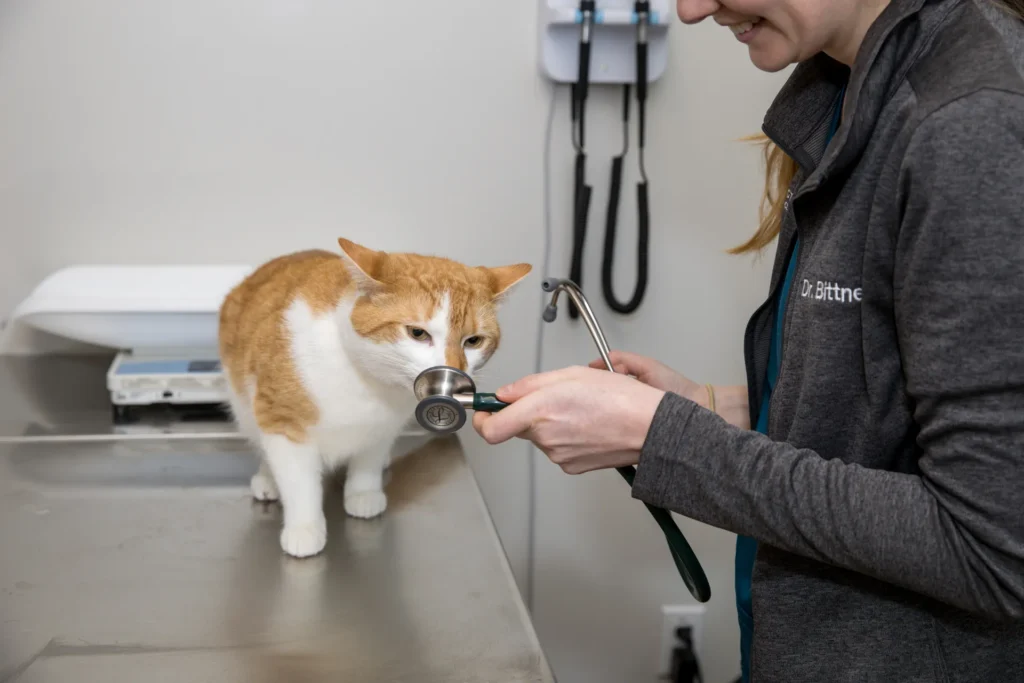
For many pets, the stress of a vet visit starts long before they arrive. The carrier comes out of the closet, the cat disappears under the bed, and the dog starts trembling as soon as the car turns toward Broadway. By the time they reach the exam room, their heart is racing.
The good news is that the carrier and the car ride are the parts of a vet visit you can practice at home. With a little patience, most pets can learn that both are nothing to fear. Here is how Arlington Animal Clinic recommends preparing cats and dogs for calmer trips.
Why the Journey Matters
A pet who arrives calm is easier to examine, and their heart rate, temperature, and even some bloodwork values are more accurate. Less stress also makes it more likely you will bring them in for preventive care rather than waiting until something is wrong.
Carrier Training for Cats
Choose the Right Carrier
- Pick a sturdy, hard-sided carrier with a removable top
- A removable top lets your cat stay in the bottom half during much of the exam
- Make sure it is large enough for your cat to stand and turn around
Make the Carrier Part of the Furniture
If the carrier only appears before a vet visit, your cat quickly learns to fear it. Instead, leave it out all the time in a room your cat enjoys.
- Remove the door at first, or prop it open
- Add a soft blanket or a piece of clothing that smells like you
- Toss treats or catnip inside a few times a week
- Feed some meals near, and then inside, the carrier
Practice in Small Steps
- Close the door for a few seconds while your cat eats a treat, then open it
- Gradually increase the time the door stays closed
- Lift the carrier briefly, set it down, and reward
- Carry it around the room, then to the car and back
Move to the next step only when your cat is relaxed at the current one. This can take a few weeks, so start well before your cat’s next appointment.
Car Ride Practice for Dogs
If the only car rides your dog takes lead to the vet or groomer, it is no surprise they get anxious. Help them build positive associations:
- Sit in the parked car together and share treats, then go back inside
- Take short drives that end somewhere fun, like Robbins Farm Park or a walk on the Minuteman Bikeway
- Use a crash-tested harness or secured crate for safety and a sense of security
- Keep the car cool and quiet, with the radio low
- Feed a light meal a few hours before driving if your dog tends to get carsick
Try a Happy Visit
Some pets benefit from short, no-pressure visits to the clinic where nothing uncomfortable happens. Call ahead to ask whether a quick stop to say hello, step on the scale, and get a treat is possible. These visits can help your pet learn that the building is not always associated with exams.
On the Day of the Appointment
- Get the carrier out early and let your cat walk in on their own
- Cover the carrier with a light towel in the car and waiting room
- Spray the blanket with a calming pheromone product about 15 minutes before leaving
- Bring high-value treats, unless your pet needs to fast
- Stay calm yourself, since pets pick up on our stress
- Keep cats’ carriers off the floor and away from curious dogs
When Anxiety Needs Extra Help
Some pets remain very fearful despite training. If your pet pants heavily, shakes, growls, hides, or struggles every time, talk to us. We can discuss options such as pre-visit anti-anxiety medication from our veterinary pharmacy, scheduling at quieter times of day, or whether a telemedicine consultation may be suitable for certain follow-up concerns.
Common Questions About Vet Visit Stress
How long does carrier training take?
Some cats are comfortable within a week or two. Others need a month or more. Slow and steady progress works best.
Should I feed my pet before a vet visit?
A slightly hungry pet is more interested in treats. Ask us whether your pet needs to fast for bloodwork or a procedure.
Is it okay to give my pet an over-the-counter calming product?
Some pheromone sprays and supplements are safe, but please check with us before giving anything by mouth.
What if my cat still will not go in the carrier?
Try placing the carrier on its end and gently lowering your cat in rear-first. Call us if you need more tips.
When to Schedule a Visit with a Veterinarian
If your pet is due for a checkup or you would like to talk about managing their anxiety, we are here to help. Arlington Animal Clinic is located at 191 Broadway in Arlington, MA, and has cared for pets in Arlington and surrounding communities for more than 45 years. Call 781-646-0758 to book a wellness visit.