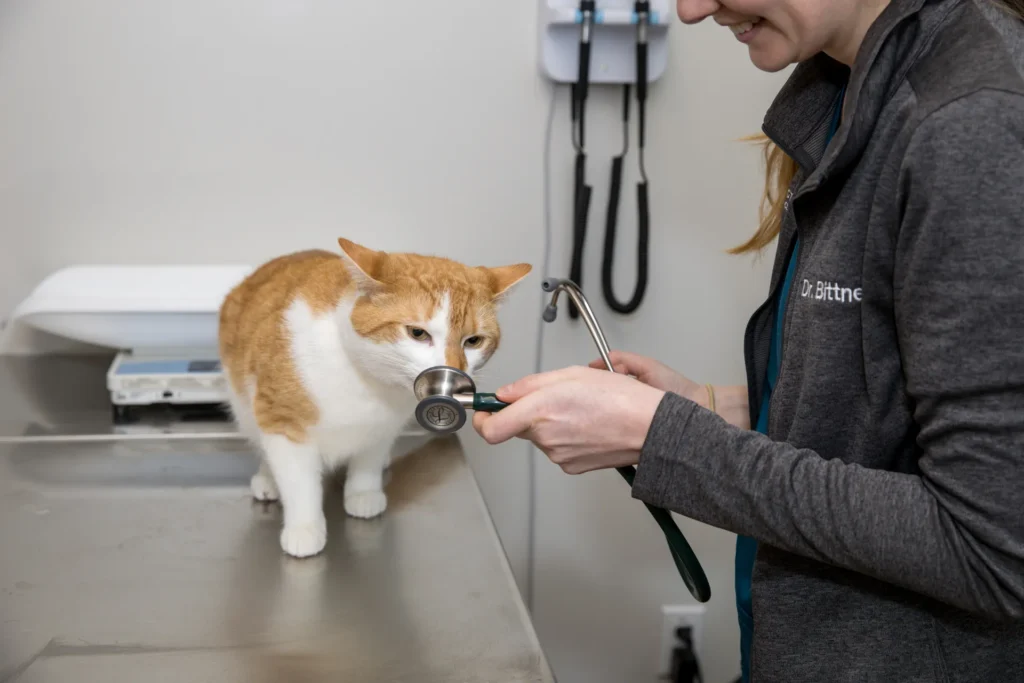
“How often should my pet have their teeth cleaned?” is one of the most common questions we hear at Arlington Animal Clinic. The honest answer is that it depends. A young Labrador with naturally healthy teeth may go several years between cleanings, while a senior Yorkie or a cat prone to gum disease may need care every year.
For pet owners in Arlington, Somerville, Medford, Belmont, and Lexington, understanding what drives your pet’s dental schedule makes it easier to plan ahead, budget for care, and avoid painful problems that could have been prevented. Here is how we think about pet dental cleaning frequency.
There Is No One-Size-Fits-All Schedule
Most dogs and cats show some signs of dental disease by age three. How quickly that disease progresses varies widely from pet to pet. Rather than following a fixed calendar, your veterinarian bases recommendations on what they see during your pet’s oral exam and on factors like:
- Age and life stage
- Breed and size
- Tooth alignment and crowding
- Amount of tartar and gum inflammation at each exam
- How consistent home dental care is
- Other health conditions, such as kidney disease or diabetes
Typical Dental Cleaning Frequency by Life Stage
Puppies and Kittens
Young pets rarely need a professional cleaning, but their first months are the ideal time to check for retained baby teeth, bite problems, and to start brushing. Retained baby teeth trap food and bacteria and are often removed at the time of spay or neuter surgery.
Young Adults (1 to 3 Years)
Many young adult pets need their first cleaning somewhere in this window, especially small breeds. Your veterinarian will look for early tartar along the gumline and mild redness of the gums, called gingivitis. Caught at this stage, dental disease is fully reversible.
Adults (3 to 7 Years)
For most adult pets, a cleaning every one to two years is common. Pets with good home care and naturally strong teeth may go longer. Pets with visible tartar at their annual exam usually benefit from yearly cleanings.
Seniors (7 Years and Older)
Older pets often need annual cleanings, and some need them more frequently. Dental infections in seniors can place extra strain on the heart, kidneys, and liver, so staying ahead of tartar buildup becomes even more important with age.
Pets That Usually Need More Frequent Cleanings
Some pets are simply more prone to dental problems. If your pet falls into one of these groups, expect your veterinarian to recommend closer monitoring:
- Small and toy breeds such as Chihuahuas, Yorkshire Terriers, Maltese, Pomeranians, and Dachshunds, whose teeth are crowded into small mouths
- Flat-faced breeds like Pugs, French Bulldogs, Shih Tzus, and Persian cats, which often have rotated or overlapping teeth
- Greyhounds and whippets, which are known for aggressive periodontal disease
- Cats with a history of tooth resorption or stomatitis
- Pets with chronic illnesses, where infection control matters even more
How Home Care Changes the Timeline
Daily brushing is the single most effective thing you can do to lengthen the time between professional cleanings. Plaque hardens into tartar within a few days, and once tartar forms, it can only be removed with professional scaling.
- Brush daily, or at least several times a week, with pet-safe toothpaste
- Choose dental chews and diets with the VOHC (Veterinary Oral Health Council) seal
- Consider water additives or dental wipes for pets that resist brushing
- Check your pet’s mouth monthly for redness, tartar, or broken teeth
Curious whether chews really help? We covered that in Do Dental Chews Actually Work for Dogs?
Signs Your Pet Is Due Sooner Than Planned
Even if your pet had a cleaning recently, call us if you notice:
- Bad breath that keeps getting worse
- Brown or yellow buildup at the gumline
- Red or bleeding gums
- Chewing on one side or dropping food
- A broken, discolored, or loose tooth
- Pawing at the mouth or facial swelling
What a Professional Cleaning Includes
A true veterinary dental cleaning is performed under general anesthesia so every surface of every tooth can be cleaned and assessed safely. At Arlington Animal Clinic, a dental procedure typically includes pre-anesthetic bloodwork, a full oral exam, dental X-rays to check the roots below the gumline, scaling above and below the gums, polishing, and treatment of any diseased teeth.
Anesthesia-free cleanings may make teeth look whiter, but they cannot clean beneath the gumline where periodontal disease actually does its damage.
Common Questions About Dental Cleaning Frequency
Does my pet need a cleaning every year?
Not always. Many pets need yearly cleanings, but some go two years or more. Your pet’s annual wellness exam is when we assess whether a cleaning is due.
Can brushing replace professional cleanings?
Brushing slows plaque buildup and can stretch the time between cleanings, but it cannot remove existing tartar or treat disease below the gumline.
Do cats need cleanings as often as dogs?
Cats vary just as much as dogs. Some cats have excellent teeth for life, while others develop painful conditions like tooth resorption that require frequent monitoring.
Is my pet too old for a dental cleaning?
Age alone is not a reason to skip dental care. With pre-anesthetic testing and careful monitoring, many senior pets undergo cleanings safely and feel much better afterward.
When to Schedule a Visit with a Veterinarian
If you are not sure when your pet last had a dental cleaning, or you have noticed bad breath or tartar, now is a good time for an exam. Arlington Animal Clinic, located at 191 Broadway in Arlington, MA, helps dogs, cats, and exotic pets from Arlington and surrounding communities build a dental care plan that fits their needs. Call us at 781-646-0758 to schedule your pet’s dental evaluation.